

Country Specific Approvals
Country approvals
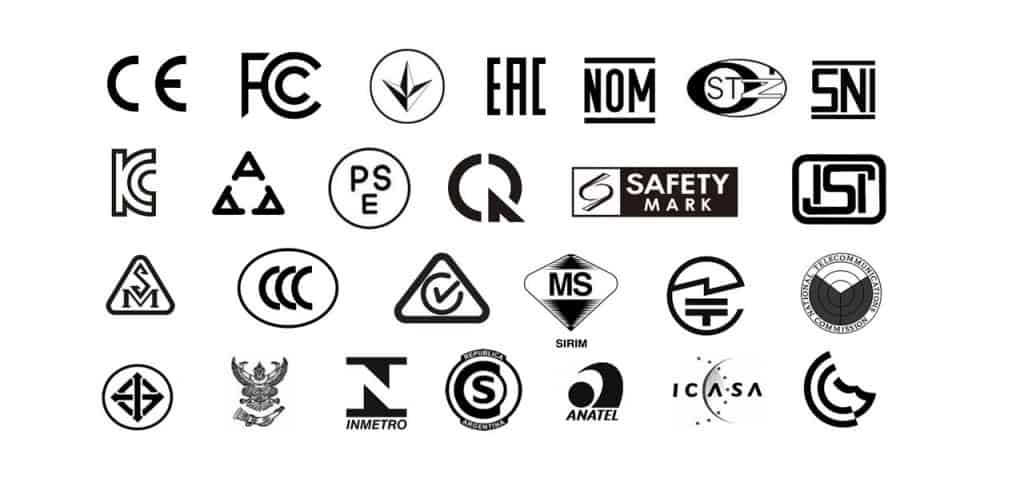
Approval process, length and cost vary a lot depending on country. CE RED or FCC certifications are used as a starting point in most of the countries. Many countries accept CE RED or FCC test results as such and approval process is paper work only. The second group of countries (e.g. India, Indonesia, Brazil or Mexico) start by reviewing RED or FCC results and do some additional testing. China, Japan and South Korea use their own test stands and apply them if required. In case of China and South Korea testing has to be done locally. Depending on the country the approval applicant is either a manufacturer or a local applicant. Local applicant means juridical company in the country (branch office, importer or representative).
More than 200 countries
TESTiLABS provides Country Specific Approvals for more than 200 countries. The key for a smooth country approval process is the local presence in a country. Throughout our partner network we have local presence in all continents. They ensure your product gets smoothly into the market.
The country approval process is controlled and managed by TESTiLABS’ project manager. She/he provides you detailed instructions on how to prepare for the approval process and reviews needed documentation. During the processes project manager takes care that your project proceeds as planned and provides progress reports to you.
ASK AN EXPERT
Have a question? We are here to help. Let’s talk!
Latest News
Brazil ANATEL: Proposes High-Security Overhaul for Product Seals
ANATEL has launched a public consultation to modernize the homologation seal, proposing advanced security features like encryption and QR codes to protect the market from
UK Ofcom Proposes New Wireless Exemptions: 5.8 GHz FWA, SRDs, and More
The UK’s communications regulator, Ofcom, is moving to slash red tape for wireless manufacturers and users. A new public consultation proposes expanding license exemptions across
Mexico Enforces Massive Fines for NOM Labeling Non-Compliance
Following the Decree reforming the Customs Law published on November 19, 2025, New Customs Law reforms introduce penalties of up to 300% of commercial value for